


In the water management sector, geosynthetics perform far more functions than just separating or sealing the ground. They are responsible for the tightness of reservoirs, the protection of slopes, the stabilization of the subsoil, and the safety of entire hydrotechnical facilities. In the case of such investments, design errors or improper material selection can lead to costly failures, loss of tightness, or accelerated degradation of the structure. Therefore, geosynthetics used in the water economy must meet strict quality requirements and technical standards that specify their functional properties.
In this article you will learn:
- What standards apply to geosynthetics used in the water industry?
- What properties of materials are crucial for the durability of investments?
- What should be considered when choosing geosynthetics for reservoirs, channels and hydrotechnical structures?
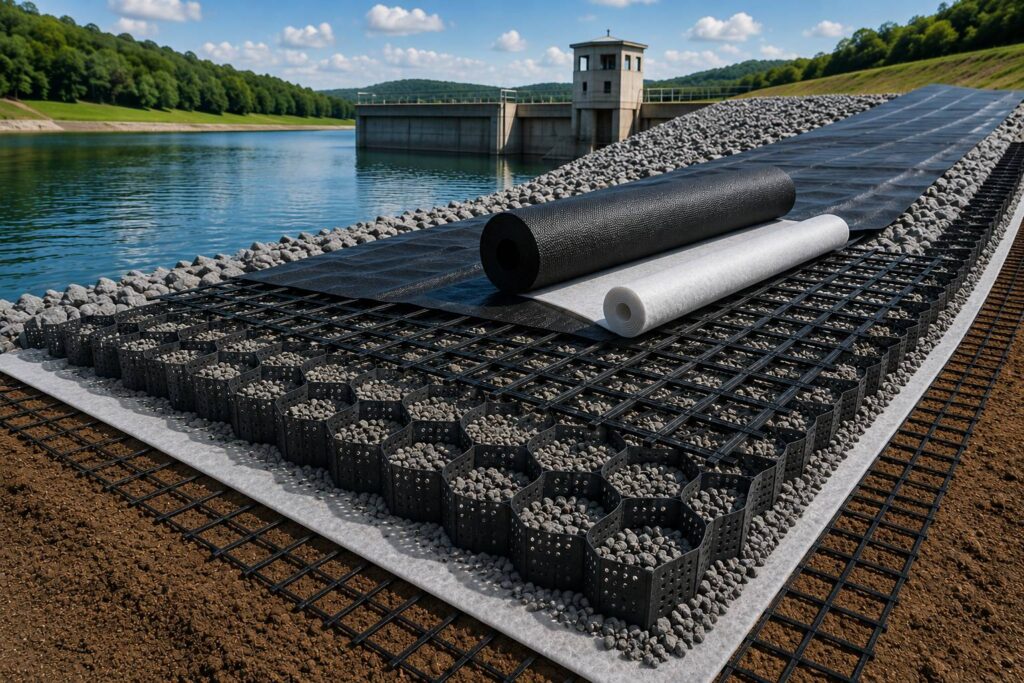
What standards apply to geosynthetics used in the water industry?
Geosynthetics used in the water sector must meet requirements regarding durability, tightness, filtration, and resistance to environmental conditions. The standards used in this area can be divided into three main groups:
- Standards defining the application of the product.
- Standards examining its mechanical properties.
- Standards verifying durability and resistance to environmental influences.
Application standards – where and for what purpose can geosynthetics be used?
In the water management sector, geosynthetics perform many functions: from filtration and drainage to erosion protection and the sealing of reservoirs and channels. For this reason, individual applications are governed by separate standards that specify the technical requirements for specific operating conditions.
EN 13252 – standard for geotextiles used in drainage systems
Geotextiles used in drainage are responsible for the drainage of water and the protection of the system from saturation. EN 13252 specifies requirements for materials used, among others, in drainage systems, drainage ditches, and retention tanks. Filter properties, water permeability, and durability of the material are crucial here.
EN 13253 – standard for geosynthetics used for erosion protection
Dams, the banks of water bodies, and channels are exposed to continuous impact from water and erosion. EN 13253 specifies requirements for geotextiles and geosynthetics used to protect the ground from washing away and loss of stability. In practice, these materials help stabilize the ground and extend the durability of hydraulic structures.
EN 13361 – standard for geosynthetic barriers used in water reservoirs
The sealing of retention tanks, technological ponds or fire-fighting tanks requires the use of materials with high tightness and resistance to damage. The EN 13361 standard regulates the requirements for geosynthetic barriers used in the construction of water reservoirs, specifying, among other things, parameters related to durability, tightness, and mechanical resistance.
EN 13362 – standard for geosynthetic barriers used in channels
Channels and facilities used for water transport require materials that are resistant to both hydraulic forces and changing environmental conditions. The EN 13362 standard specifies requirements for geosynthetic barriers used in canal construction, where maintaining tightness and long-term durability of the system are crucial.
Mechanical standards – how to test the strength of geosynthetics?
In the waterborne industry, geosynthetics are constantly exposed to the effects of mechanical loads, ground pressure, water movement, and damage that may occur during installation. Therefore, in addition to compliance with standards, testing to determine the strength and durability of materials is also essential:
| Norma | What does it study? | Why is it important? |
| EN ISO 10319 | Resistance to stretching | Assessment of the material's load-carrying capacity and its ability to transfer loads |
| EN ISO 12236 | Resistance to static breakdown | Protection of sealing layers from damage by soil and gravel |
| EN ISO 13433 | Resistance to dynamic penetration | Assessment of the material's resistance to damage during transport and assembly |
| EN ISO 12956 | Characteristic pore size (O90) | Control of filtering properties and the retention of soil particles |
In practice, the proper selection of mechanical parameters not only allows meeting the normative requirements, but also increases the durability of the investment, reduces the risk of damage during installation, and optimizes operating costs throughout the entire life cycle of the facility.
Durability standards – how to assess the material’s resistance to environmental factors?
Geosynthetics used in the water management sector are designed for long-term operation. Unlike many other construction materials, they often work in constant contact with water, soil, solar radiation, and substances naturally or industrially present in the environment. Therefore, in addition to mechanical parameters, an assessment of their durability over a long period of use is equally important.
Resistance to UV radiation
Many geosynthetics They are temporarily or permanently exposed to the effects of solar radiation. Prolonged exposure to UV radiation can lead to the degradation of material structure, loss of strength and shortening of its lifespan. Therefore, manufacturers conduct tests to determine the resistance of materials to UV-induced aging, especially in applications related to the protection of slopes, water reservoirs or hydrotechnical structures.
Resistance to wear and tear
One of the fundamental requirements imposed on geosynthetics is the preservation of their functional properties over many years of use. In practice, this means the need to assess the impact of time, temperature, and environmental conditions on the structure of the material.
Chemical resistance
Depending on their application, geosynthetics may come into contact with rainwater, sewage, landfill leachate, fertilizers, or chemical substances present in the soil. Chemical resistance assessment allows verifying whether the material will not degrade under the influence of contact with an aggressive environment and whether it will retain its sealing, filtering, or separating properties throughout the entire service life.
Biological resistance
Materials used in the water economy are also exposed to the action of microorganisms, bacteria, fungi, and biological processes occurring in the soil and water. Biological resistance studies allow determining whether the material will retain its properties in an environment with increased biological activity and whether it will be susceptible to degradation resulting from natural processes occurring in the environment.
If you plan an investment related to the sealing of water reservoirs, erosion control, drainage, or other applications of geosynthetics in the water management sector, it is worth consulting the selection of the solution at the project stage. This will reduce the risk of execution errors, optimize the costs of the investment, and increase the durability of the entire facility.






 English
 Polish
 German