


Twin sheet
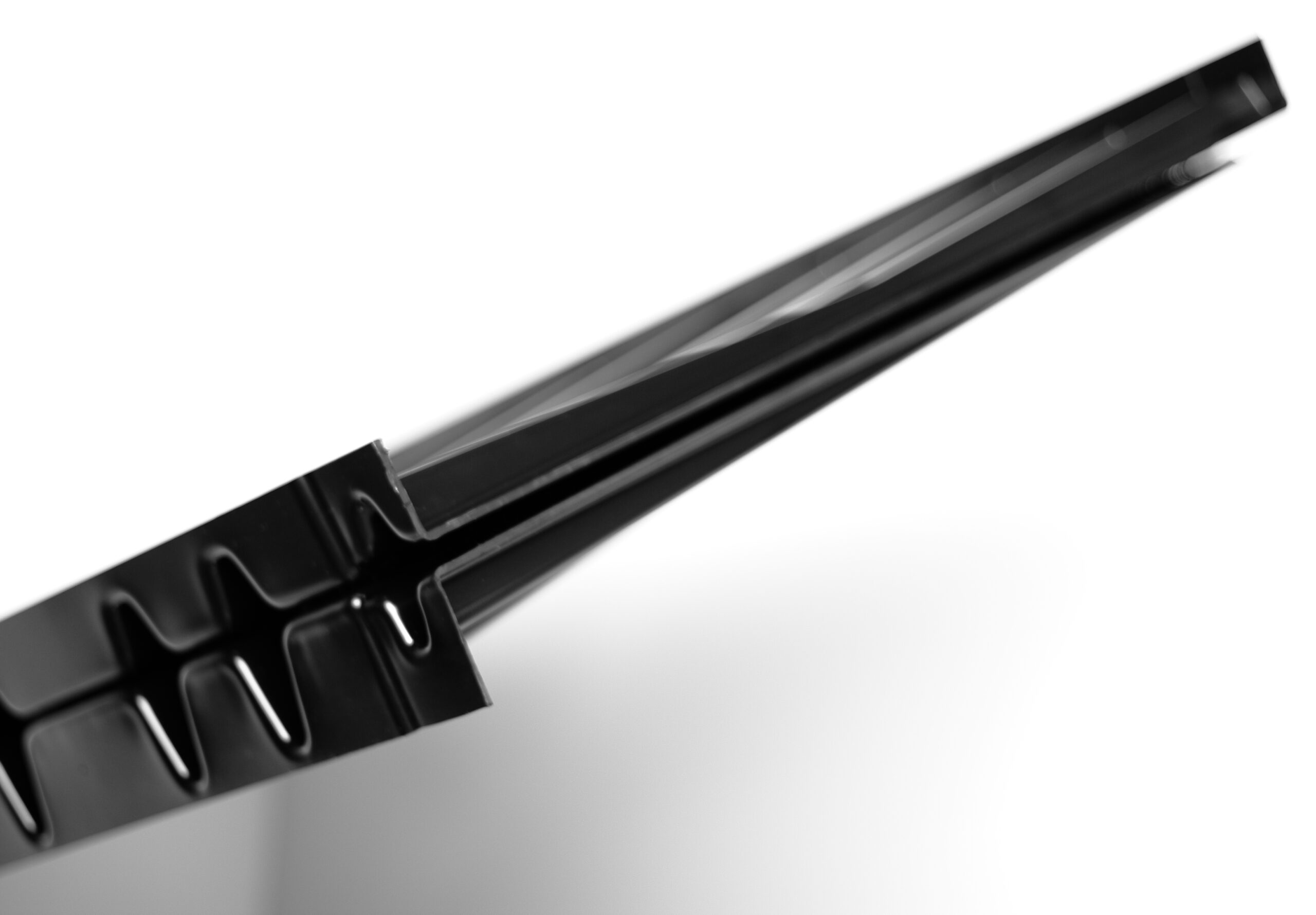
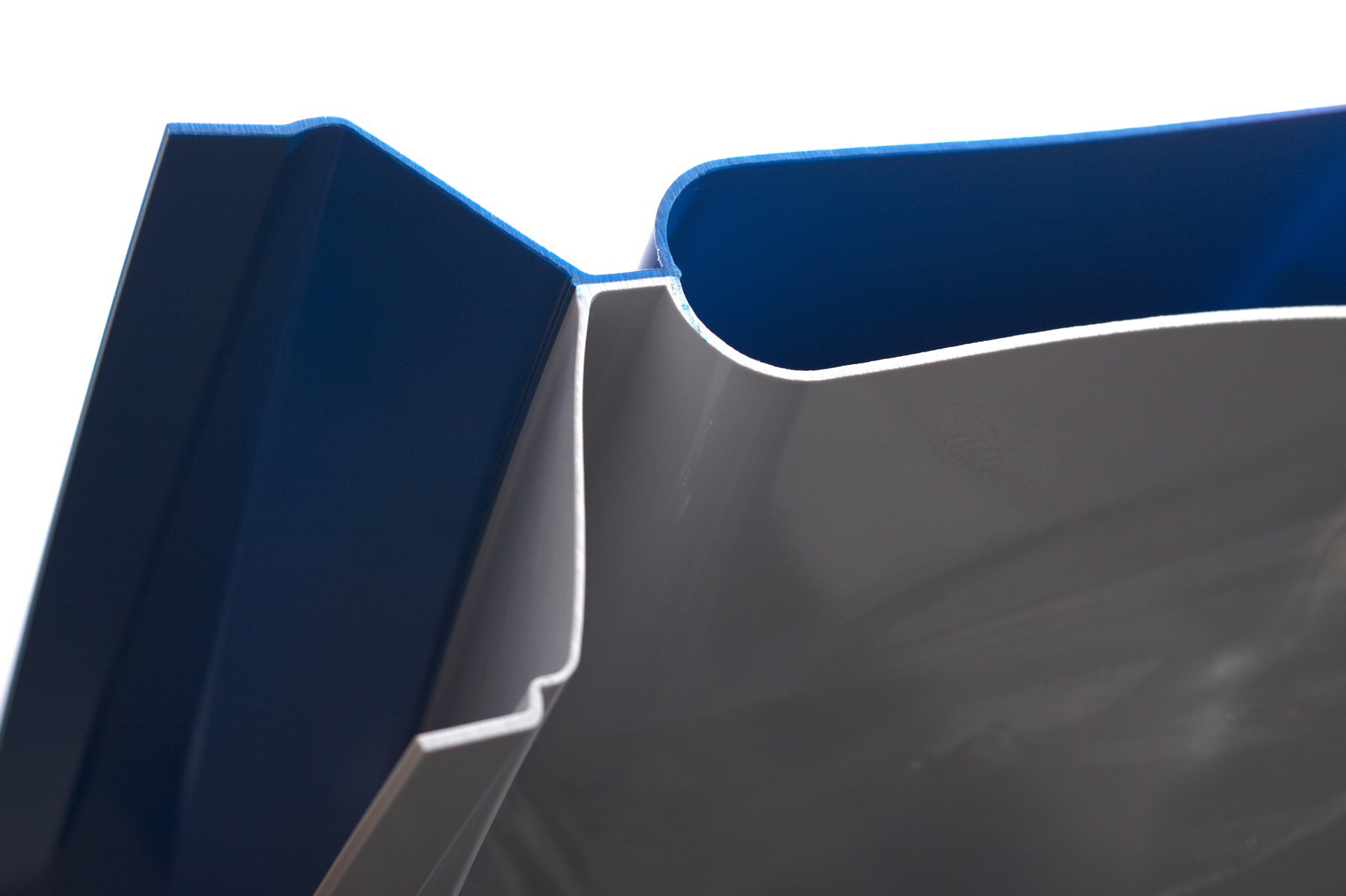
Twin sheet is an advanced thermoforming technology for plastics. Thanks to this revolutionary solution, two different types of board can be formed and welded together inseparably in a single operation. The technology makes it possible to make elements that are very strong, as one of the two panels can reinforce the whole structure.
Custom twin-sheet thermoforming
Twin sheet is a process involving the thermoforming of two thermoplastic sheets, which are then heat-sealed together at designated points once shaped. This technology enables the design of double-walled components with an internal cavity and structural reinforcement zones. Geo Globe carries out twin-sheet projects as part of a comprehensive service: from material selection and geometry design to tool preparation, prototyping and mass production.
This solution is worth considering when a single coating does not provide the required functionality and the component requires a three-dimensional structure. However, the suitability of the technology depends on specific requirements: loads, conditions of use, method of installation and the planned scale of production. Please send us the documentation or describe the component’s intended use. We will begin our discussion by establishing what the finished product actually needs to withstand and enable.
How does a twin sheet work?
In the twin-sheet process, two heated sheets are shaped as required and then bonded together at their points of contact. The remaining areas may form a space between the layers. It is therefore not simply a matter of layering two sheets of plastic, but a method of producing a three-dimensional component with a specific geometry.
Joint zones form part of the design. They may run along the perimeter or at selected internal points, depending on the design and function of the component. Their positioning affects how the two shells interact, so they must be analysed in conjunction with the shape of the finished part.
This technology makes it possible to give the two sides of a component different functions. One surface may be primarily responsible for the external shape, whilst the other provides support or determines how the component is integrated into a structure. However, this approach requires a feasibility study, rather than simply the creation of an attractive 3D model.
An important distinction: a hollow component does not necessarily have to be leak-proof. If the design is intended to contain a liquid, maintain pressure or limit the ingress of contaminants, this requirement must be specified separately and verified by an appropriate test.
When to choose two coatings
A twin-sheet design is worth considering when the space between the shells and the way they are joined together solves a specific structural problem. This may involve achieving a three-dimensional cross-section, stable support, or two functional surfaces within a single component.
Not every component requires this type of construction. If the part’s sole purpose is to shield a sub-assembly, a simpler design made from a single sheet may prove sufficient. An additional layer should provide measurable value, rather than unnecessarily increasing complexity.
A comparison of technologies should be based on the same set of requirements. It is not only the appearance and dimensions that matter, but also the loads, tolerances, method of fixing and the operations carried out after the part has been moulded. Only by considering this full range of factors can the different options be meaningfully compared.
At Geo Globe, we combine the evaluation of a solution with the preparation for production. Design, tooling, prototyping and CNC machining are all part of the wider process of manufacturing thermoplastic components. We determine the scope of a specific project based on the documentation and the client’s expectations.

The material and geometry are the deciding factors
The strength of a twin-sheet component is not determined solely by the presence of two sheets. The material, the wall thickness after forming, the distance between the sheets and the arrangement of the joint zones all play a significant role. A local change in geometry can affect the performance of the entire component.
The starting point for the design should be a description of the loads. A force distributed over a surface is assessed differently from a force applied during fastening, an impact or repeated deformation. The statement ‘the component must be strong’ is no substitute for this data.
Selecting the right material also requires an understanding of the operating environment. Temperature, contact with chemicals, outdoor exposure and cleaning methods can all affect the requirements for the material. It is advisable to gather information on these conditions before starting to design the tools.
It is possible to use different sheets in a suitably designed process, but this does not mean that any materials will bond correctly. It is necessary to take into account their behaviour during heating, moulding and cooling, as well as the quality of the resulting weld.
The use of recycled material also requires assessment on a part-by-part basis. The proportion of recycled material should not be specified at the expense of the required repeatability, nor without confirmation of the properties required for the application in question.
From a model to a proven detail
For an initial assessment of a twin sheet design, it is worth providing a 3D model or drawing, a description of the parts’ functions and the anticipated production volume. If the geometry is not yet finalised, a description of the problem that the new component is intended to solve will be helpful.
Please supplement the documentation with details of operating conditions, loads, fixing points and surfaces requiring particular precision. Please also indicate which requirements are mandatory and which can be modified. This distinction helps in finding a solution without unnecessarily complicating the design.
Before mass production begins, the method for assessing the prototype must be agreed upon. Dimensional checks do not answer all the questions: a component may fit into the assembly but still perform incorrectly under load. Tests should reflect the actual application.
In the design, it is worth assessing the cladding and the joints between them separately. If load-bearing capacity, impact resistance or watertightness are required, appropriate acceptance criteria are needed. The test result should confirm compliance with the requirement, not merely give a general impression of robustness.
The cost of implementation depends, amongst other things, on the geometry, material, tools, finish and scale of the order. Please send your project details to Geo Globe. Based on these, we will discuss the scope of work and the information required to prepare a solution.
WE THINK GREEN
Our know-how is in line with the global trends of Recycle, Reuse, Reduce. To the partners who trusted us, we guarantee that the production of plastic components is carried out with full respect for the environment.
Our approach is long-term, environmentally friendly and comprehensive – we ensure that the entire process is carried out in one place, from the design of the component to the production phase, which saves time and resources, we advise our partners and offer solutions tailored to their needs, so that the prototype turns into the expected final product.
Frequently asked questions about twin-sheet technology
How does twin-sheet moulding differ from single-sheet thermoforming?
Twin-sheet moulding involves forming two thermoplastic sheets and joining them at designated points. Unlike thermoforming a single sheet, this method produces a double-walled structure with a cavity between the walls. The choice of method depends on the component’s function, the required stiffness, the loads it will be subjected to, and the conditions of use.
Is it possible to join two different plastics?
Under the right conditions, various types of sheet material can be used, but their compatibility must be checked. The mere fact that both materials are suitable for thermoforming does not in itself guarantee the quality of the joint.
Is the twin sheet component always watertight?
No. Leak-tightness is a separate design and acceptance requirement. The medium, operating conditions and test method for the finished component must be specified.
What should you prepare for the valuation?
It is best to provide the documentation, a description of the application, operating conditions, quality requirements and the anticipated order quantity. If the design is incomplete, please indicate any limitations and issues that require joint refinement.
Does twin-sheet always reduce production costs?
Twin-sheet production does not always mean lower production costs. The technology can be cost-effective if it reduces the number of separate components or assembly operations. However, cost-effectiveness depends on tooling costs, batch size, the complexity of the component and the requirements for the finished product.


 English