


Learn more about the possibilities of the vacuum thermoforming technology.
AEROSPACE
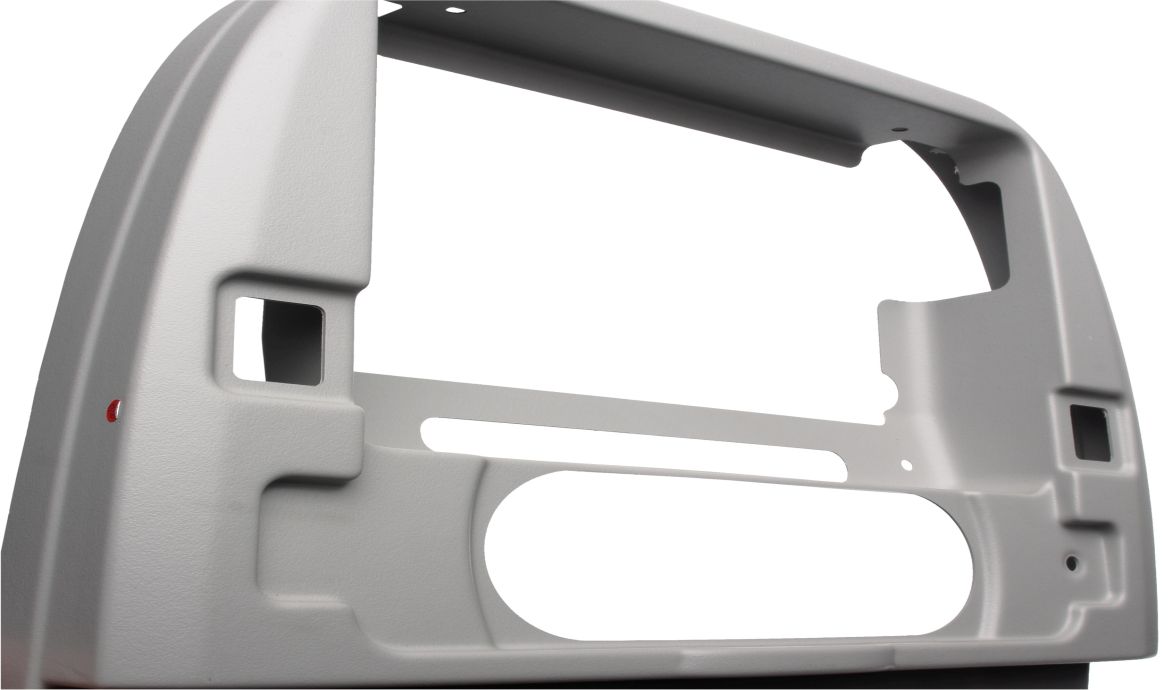
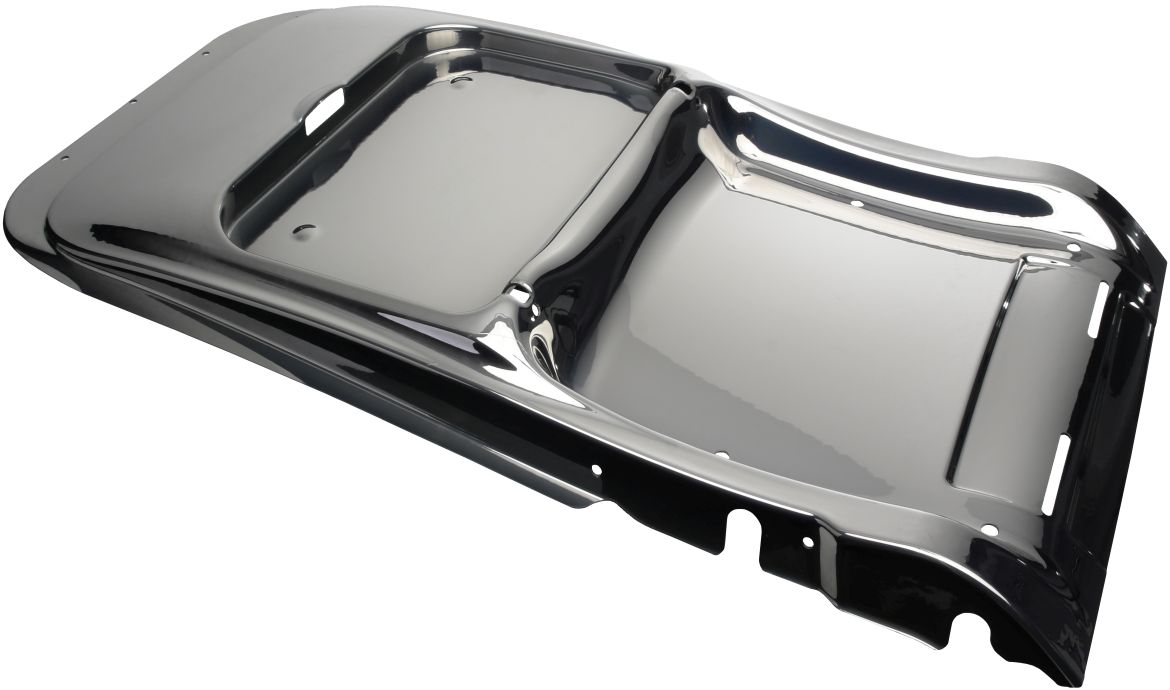
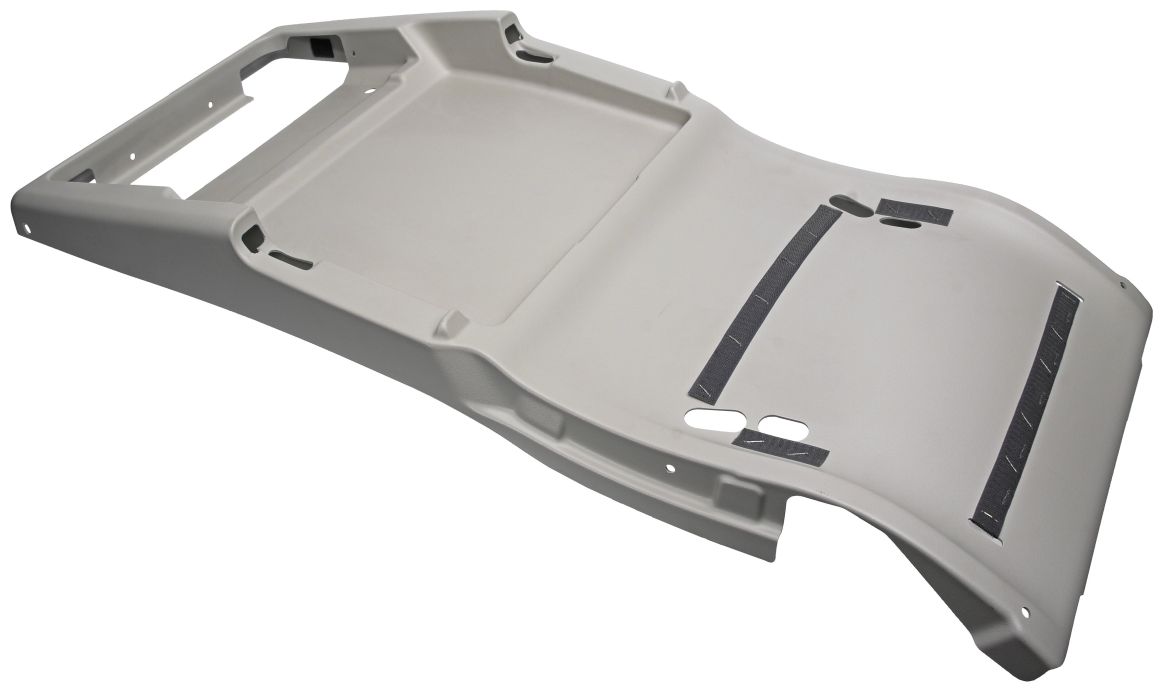
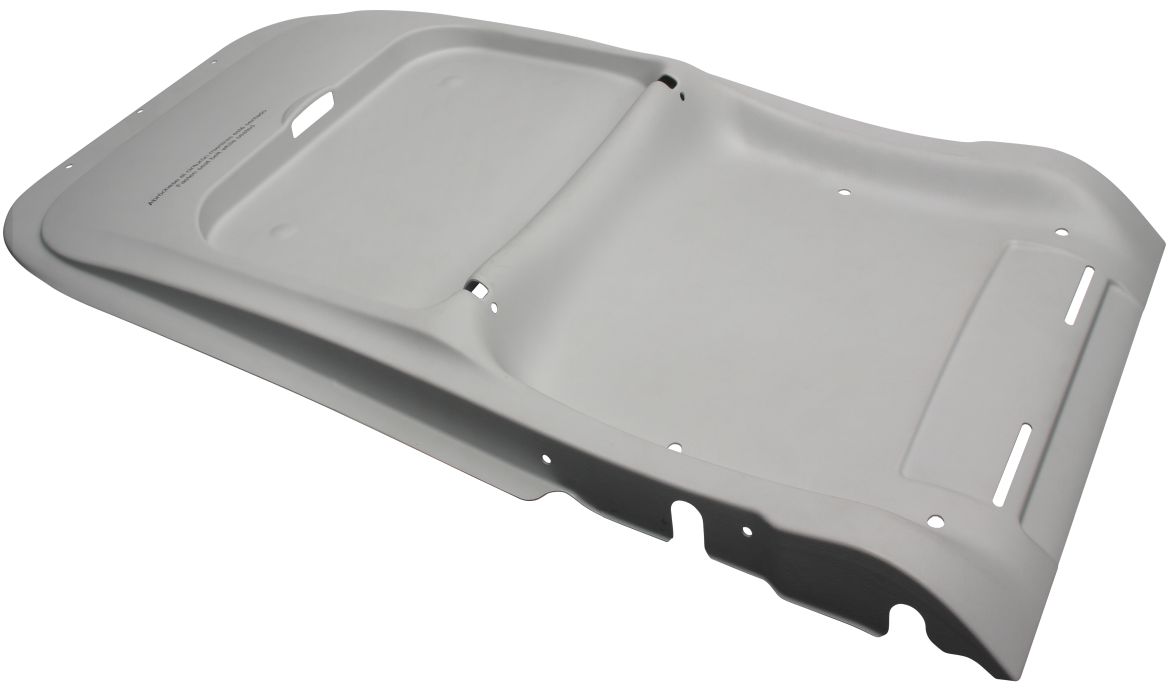
We have been making aircraft seat components, armrests and tables for many years. The specialised materials from which they are made require exceptional skill in the manufacture of aluminium thermostatic moulds, CNC fixtures and the selection of appropriate machine settings. The highest standards at every stage of production mean that the components we make are characterised by very high aesthetics and repeatable series production.
The production of plastic components for aviation requires the highest precision, repeatability, and compliance with strict safety standards. At Geo Globe Polska we have been manufacturing aircraft seat components, armrests, tables, and cabin panels using the injection molding method for many years. vacuum thermoforming. Specialty flame-retardant materials from which they are made require exceptional skills in the production of aluminum thermoformed molds, CNC handles, and in selecting the appropriate machine settings.
Modern aircraft such as the Airbus A350 and Boeing 787 Dreamliner are made of more than 50 percent plastic and composites. This is a clear sign: lightweight, durable and flame-retardant thermoplastic materials are replacing metal wherever weight reduction, fire resistance and the aesthetics of the finish are important.
Our Industrial design It allows the entire process to be carried out: from 3D design through to prototyping and fire testing, all the way to serial production meeting the highest standards of the aviation industry.
Plastic cabin components for aviation
Vacuum thermoforming enables the production of a wide range of aircraft interior components. At Geo Globe Polska we manufacture both cabin interior equipment components and technical parts requiring precise fitment.
Equipment of the passenger cabin
Elements of airline seats: backrests, armrests, folding tables and covers for adjustment mechanisms. We design each element with ergonomics, weight and flame resistance requirements in accordance with FAR 25.853.
Wall and ceiling panels: Finishes for the passenger cabin that combine aesthetics with fire resistance. Thermoforming allows for uniform surfaces with complex curvatures that are impossible to achieve using traditional machining methods.
Elements of the galley and lavatories: cabin kitchen cabinets, toilet panels, storage compartments and luggage shelves. These components must withstand intense use, cleaning agents and frequent temperature changes.
Technical and structural elements
Wiring masking profiles: shields for cable harnesses and installations running through the cabin. They must be lightweight, easy to install and remove during technical inspections.
Ventilation ducts and system covers: components that direct air from the air conditioning system and protect the onboard systems. They require precision dimensions and resistance to vibration.
Elements twin sheet: Double-wall components that provide additional rigidity and thermal insulation with minimal weight. This technology is suitable for floor panels and cabin partitions.
Flame-retardant materials used in aviation
The choice of material for aircraft components is not a matter of preference but a requirement of safety. Each material must undergo rigorous tests for flammability, smoke emission and toxicity (FST). Below we present the materials we work with in the production of aircraft components.
Polycarbonate PC and PC/ABS FR blends
Polycarbonate (PC) It combines high transparency with impact resistance. We use it for lighting covers, information panels and decorative elements in the cabin. Blend PC/ABS in flame-retardant version (FR) It is the most commonly chosen material for chair elements, armrests and tables, because it provides a good balance between mechanical strength, machinability and compliance with FAR 25.853.
PEI (Ultem) - the gold standard of aviation
Polyetherimide (PEI), Known by the trade name Ultem, it is a material with the highest fire resistance class among thermoplastics used in thermoforming. PEI meets the requirements of FAR 25.853 without additional modifications and is characterized by minimal smoke and toxic gas emissions. It is used in wall panels, ceilings, and galley components, where FST requirements are the strictest.
PEEK and PPS - special applications
PEEK (polyether ether ketone) It withstands continuous operating temperatures above 250°C and is used in components exposed to extreme thermal conditions, e.g. near engines. PPS (polysulfone phenylene) It provides excellent chemical resistance and dimensional stability. Both materials meet the flame retardancy standards without modification, but due to their higher cost they are used in components with special requirements.
Comparison of aeronautical materials
The following list presents the key parameters of materials used in thermoforming of aircraft components:
PC/ABS FR — working temperature up to 110°C, good impact resistance, affordable price, used in chairs, tables, armrests. Requires the FR version to comply with FAR 25.853.
PEI (Ultem) — operating temperature up to 170°C, minimal smoke emission, meets FST without modification. Used in cabin panels, galleys, ceilings. Gold standard in aviation.
PEEK — operating temperature above 250°C, highest mechanical strength, chemical resistance. Used in components of engines and structural components. Highest cost.
PPS — operating temperature up to 220°C, excellent dimensional stability, resistance to chemicals. Used in technical components, ducts, and system covers.
FAR Standard 25.853 - fire performance requirements for cabin components
Every plastic component installed inside the transport aircraft must meet the requirements of the standard. FAR 25.853 (Title 14 CFR 25.853), which regulates the fire resistance of materials in passenger and crew compartments. At Geo Globe Polska we design and test components to meet these requirements right from the selection stage of the material.
Tests that the cabin components must undergo
Vertical Burn Test (vertical burning test): A mandatory basic test for all materials. The sample is exposed to the flame of a Bunsen burner for 60 seconds (panels, walls, ceilings) or 12 seconds (textiles, cushions). The maximum burn time cannot exceed 15 cm.
FST tests (Fire, Smoke, Toxicity): An extended set of tests required for ceiling panels, partition walls, galley structures, large cabinets and luggage compartments. It includes measurement of smoke density, exhaust toxicity and the amount of heat emitted (Heat Release Test).
Oil Burner Test: The strictest test required for passenger seat cushions. It simulates an intense fuel fire, verifying that the cushion does not sustain the flame after the ignition source has been removed.
How we ensure compliance with the standard
Compliance with FAR 25.853 begins with the selection of the appropriate material. Materials such as PEI (Ultem) and PEEK meet the requirements without modification. PC/ABS-based materials require a flame-retardant version (FR), specifically developed for aviation testing.
The thickness of the wall of the finished element must correspond to the thickness tested in certification. Therefore, precision the thermoforming process and the uniform distribution of material has a direct impact on compliance with the standard. We control these parameters at every stage of production.
Weight reduction: why aviation chooses plastics
Weight is one of the most important parameters in aircraft design. Every kilogram less means lower fuel consumption, less CO₂ emissions and a higher allowable commercial load. Thermofused plastic components are even more efficient. 40% lighter similar to their metal counterparts in terms of comparable mechanical strength.
Plastics vs. metal - the scale of savings
In the Airbus A350 XWB aircraft, plastics and composites account for 53% of the structural mass. The Boeing 787 Dreamliner uses them in 50% structures. This change resulted in a reduction in fuel consumption of approximately 20% compared to the previous generation of aircraft of similar size.
On the passenger cabin scale, replacing aluminum panels, covers, and seat elements with thermoformed counterparts made of PC/ABS FR or PEI provides measurable weight savings without compromising on safety and aesthetics.
Additional benefits beyond weight
Corrosion resistance: The plastics do not rust and do not require anti-corrosion protection, which reduces maintenance costs.
Freedom of formation: Thermoforming allows for complex geometries, rounded edges, and the integration of multiple functions into a single element, which reduces the number of components and assembly points.
Thermal and acoustic insulation: the plastics have a lower thermal conductivity coefficient than metals, which improves the cabin’s thermal comfort and reduces noise.
The production process of aeronautical components: from design to a certified component
The production of plastic components for aviation follows strictly defined stages, each step of which is subject to quality control. At Geo Globe Polska, we carry out the entire process in one place: from industrial design after serial production.
Stages of implementation
1. Analysis of requirements and material selection: We determine the working conditions of the component (temperature, loads, flame retardancy standards), and then select the appropriate material based on the required properties. For cabin components, we recommend PC/ABS FR or PEI, depending on the location in the aircraft and the FST requirements.
2. 3D design and documentation: The designers create a digital model of the component in CAD, taking into account the wall thicknesses, radius of curvature and dimensional tolerances. At this stage, we already analyze the possibility of thermoforming and optimize the geometry for the production process.
3. Construction of the aluminum mold: The precision aluminum thermoformed mold, manufactured on CNC machines, ensures repeatability of the shape and high surface aesthetics. Aluminum guarantees even heat dissipation during molding.
4. Thermoforming and quality control: The sheet of plastic is heated to the plastic temperature and then molded on a mold using vacuum pressure. Each element undergoes dimensional and visual inspection. Key parts are verified using the Hexagon Absolute Arm portable measuring arm.
5. Finishing treatment: CNC cutting, drilling of mounting holes, edge finishing. The element is ready for assembly in the aircraft.
6. Serial production: The optimized process allows for the repeatable production of series with constant quality and compliance with certificates.
Sustainable production of aircraft components
The aviation industry faces a challenge: reducing its environmental impact without compromising safety. At Geo Globe Polska, we respond to this challenge on three levels.
Weight reduction = emission reduction: Lighter plastic components directly reduce fuel consumption and CO₂ emissions throughout the aircraft’s entire life cycle.
Recycled materials: we are developing the use of recycled plastics (rPET, rPP) in non-cabin elements, such as transport trays for the logistics of aircraft parts. We have our own recycling line that closes the raw material cycle in the production process.
Process optimization: Realization of the entire process in one place, from design to production, eliminates unnecessary inter-process transportation and shortens the supply chain. This approach is in line with the Reduce, Reuse, Recycle philosophy.
If you are planning to upgrade your cabin equipment or need replacements for plastic components, Contact us. We will discuss the technical requirements and propose a solution tailored to your fleet.
Check out other applications of the technology:
5/5
(1 Review)






 English
 Polish
 German