


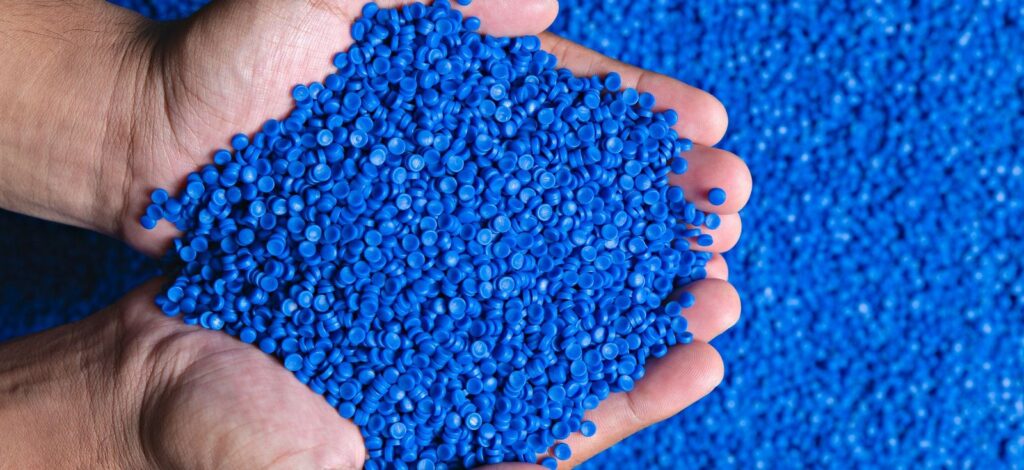
Biodegradable plastics are gaining popularity as a potential solution to waste management problems. But do they represent the only direction for sustainable development? A study conducted by the WWF Foundation (Word Wide Fund For Nature) show that Over the past 65 years, plastic production has increased from 2 million to as much as 348 million tons. Meanwhile, recycling systems simply... can't keep up. Although officially our country's recycling rate ranges from 27 to just over 30 percent, its real level, according to an industry magazine report Plastics Review is less than 10 percent. In view of these disparities, three questions arise:
Could biodegradable plastics hold the key to solving this global problem?
Do they really meet expectations in terms of production and business needs?
And finally:
How do these types of materials perform in terms of durability and in which industries are they most commonly used?
What are biodegradable plastics?
The notorious plastics are made up of polymers such as polyethylene and polypropylene. However, there is a specific group of polymers, which include biodegradable polymers. Such plastics are made from biopolymers or natural ingredients such as starch, cellulose, making them less harmful to the environment compared to conventional plastics, which are based on petrochemicals.
What does it mean for something to be biodegradable?
Biodegradable plastics are materials that are broken down naturally by microorganisms. Everyone is familiar with the saying that says. in nature nothing perishes, and the biodegradation process is the transformation of biodegradable polymers into safe and definitely more environmentally friendly compared to plastics. The biodegradation process involves, among other things, bacteria and fungi that convert raw materials into:
- carbon dioxide;
- water;
- biomass.
Biodegradable plastics - applications
Biodegradable plastics are used in the production of municipal waste bags, food packaging and medical products. However, they are more expensive to produce compared to traditional plastics, which is a major barrier to their wider use. In addition, their degradation in different environments is not always as efficient as research suggests. Well, a study conducted by a team from the University of Plymouth found that even after three years of exposure in different environments, biodegradable bags could still hold large purchases, which sheds light on their durability. The compostable bags disappeared within three months in seawater, but were still present in soil after 27 months. This indicates that biodegradation is not always as effective as assumed.
Biodegradable plastics in a business context
Clearly, for entrepreneurs, the question of choosing between biodegradable and traditional materials plastics is not limited to environmental aspects. Durability, production costs and recyclability are key factors influencing business decisions. Traditional plastics, while less environmentally friendly, are often more economical and easier to recycle, which can be a more practical solution for many industrial applications. Biodegradable plastics, while theoretically ideal from an environmental perspective, do not always meet expectations in terms of sustainability and production costs. They are particularly valued in industries that require short-term use of materials, such as disposable packaging and medical products. For companies where material durability and reliability are key, traditional plastics still trump biodegradable.
It's recycling and the idea zero waste is the key
With the low (real) recycling rate, having your own plastic processing line becomes a key issue. W Geo Globe We understand this situation very well, which is why our machinery is equipped with advanced plastic grinding mills and our own recycling lines, enabling us to process production waste and produce more efficiently. All these activities are part of the concept of zero waste, where waste is reused in production, both internally and by external customers.
Plastics, despite their durability and functionality, are still viewed negatively because of the problems associated with their processing. However, thanks to the possibilities formations and reprocessing, plastic can be used efficiently and responsibly. This contrasts with solutions such as packaging composed of heterogeneous materials (for example, paper bags with internal plastic components), which paradoxically can be more difficult to recycle, although they often have better PR, and are not always greener.
From a business perspective, it is therefore crucial to understand how best to use plastics to maximize their durability and minimize waste. This approach is certainly both economically and environmentally beneficial.
Follow us on social media
You may also be interested in:
- Geo Globe Polska at the Plastenica Expo 2026 trade fair
 On November 3-5, 2026, Geo Globe Polska will participate in the premiere edition of Plastenica Expo at Ptak Warsaw Expo in Nadarzyn. At a joint stand, we will present vacuum thermoforming and the GEOMAXX® cellular geosynthetic. We invite you to Hall C, stand C34. The premiere edition of the trade fair for the plastics industry, International Polymer and Technology Trade Fair for Plastics Processing ...
Geo Globe Polska at the Plastenica Expo 2026 trade fair Read More "
- Plate thickness vs. thickness of the finished part: what to consider when designing thermoforming?
 The thickness of the thermoforming plate is not the thickness of the wall of the finished component. During molding, the heated material stretches, and its thickness changes locally. Therefore, the selection of material should take into account the geometry of the part, the minimum requirements in critical areas, and the conditions of use. The „ABS plate” information with the specified dimension is not enough to assess the strength of the enclosure, the guard, or the transport rack. This …
- How to choose a cellular geocoin? Price, durability and technical parameters
 Does a lower price actually mean savings? Cell geogrids currently available on the Polish market at first glance look almost identical. They have a similar design, similar dimensions and are offered for the same applications: for making driveways, parking areas or access roads, for reinforcing slopes or stabilizing the ground. However, the price difference can be significant. In such a situation, naturally the question arises …
How to choose a cellular geocoin? Price, durability and technical parameters Read More "
- Case Study – Business class tables with a functional permanent print – an individual solution for the aviation industryHow did we implement new technology to meet the high demands of the aviation industry? In the aviation industry, there is no room for chance. Especially when a component reaches the business class cabin, where technical precision must go hand in hand with the aesthetics of the premium class. For one of our clients, we developed thermoformed table components. They had to work precisely with the entire mechanism and meet the required …






 English
 Polish
 German